We use cookies to ensure you get the best experience on our website. Learn more
Decline
Allow Cookies

Guide
Explore this region's page
Resource
Articles provide general information for the public, while Resources deliver technical guides and tools tailored specifically for ArdaCraft contributors.
Written by
DieWursttheke
A stable is an enclosed space for animals to stay, either as a stand-alone building or as part of another building.
If animals are kept in a living area, it is called ‘integrated animal husbandry’
Barns should always have Fodder/Hay Loft/Storage and are used in most cases for work animals or over the winter.
Advantages
Disadvantages
A shelter is defined by a roof, but not necessarily by walls. It has up to 3 walls, although in most cases the weather sides are protected.
Some Shelters can be built and moved seasonal over the year.
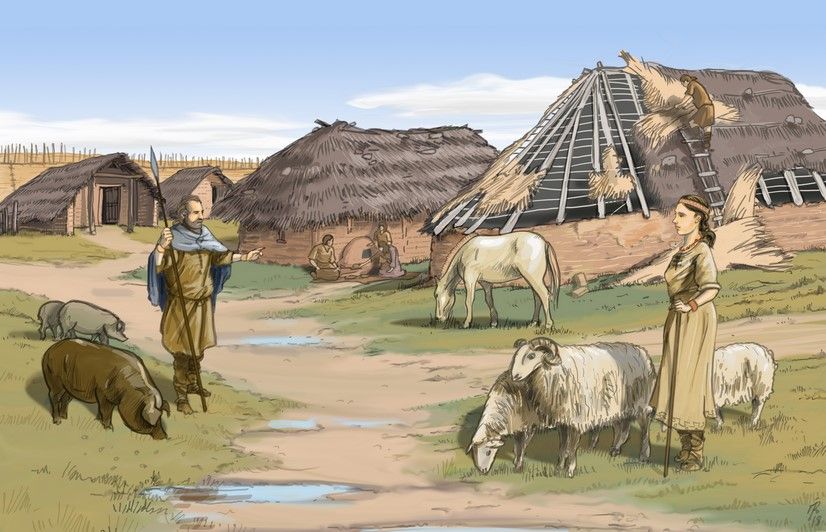
A pasture can be permanently marked and staked out or visited seasonally as a living and feeding place for animals.
Advantages
Disadvantages
In order to maintain good pastures for animals all year round, a few steps are necessary.
Larger pastures are generally better, as they provide more space for the animals to move about. This allows more time for the soil and grass to recover.
These large pastures can also be divided into smaller enclosures, to better allow other areas to regenerate.
Smaller pastures allow less space for grazing, and also require more labor to maintain (tilling the soil and removing droppings, for example).
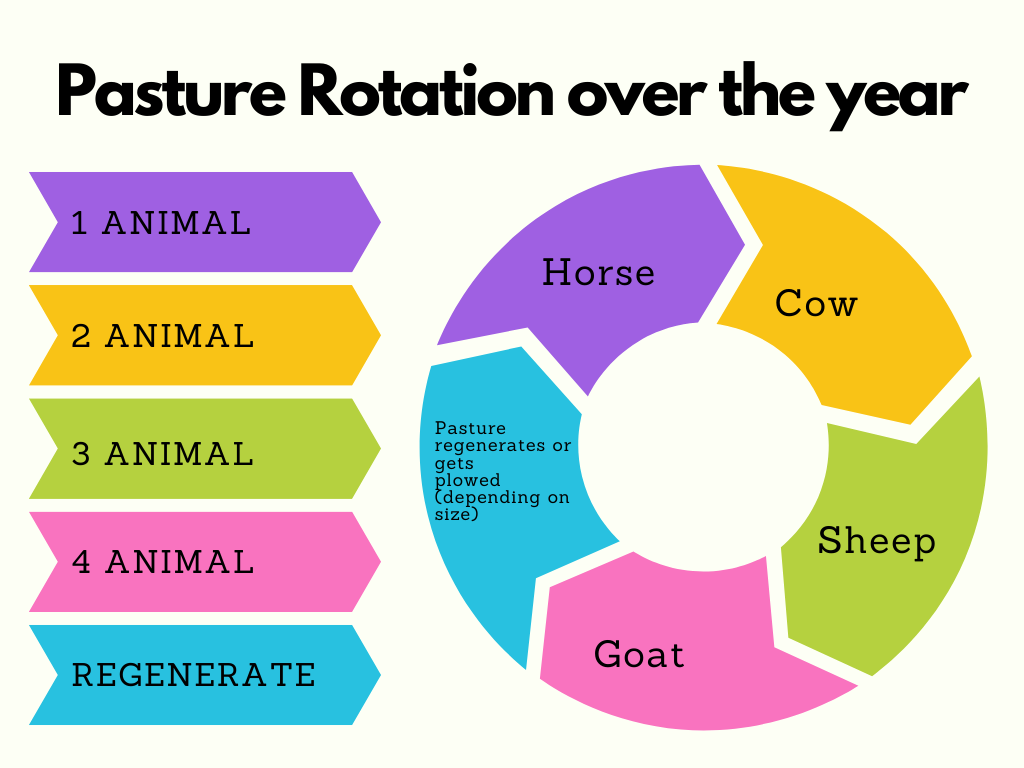
The pasture rotation shows how the optimal use of a pasture area should take place:
The shepherd can go out with the flock every day or leave the area for a longer period of time, depending on the season.
When kept outside, the animal is usually left to its own devices, but must have contact with humans at regular intervals. Otherwise there will be a change in escape behavior and the animals will go wild.
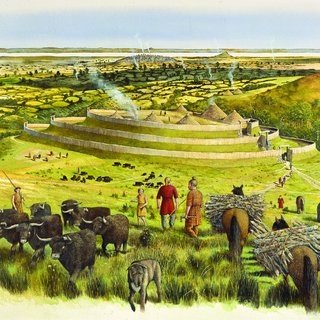
All animals are taken to the mountains or permanent more far away pastures in early summer and autumn in order to have grass in the valley and closer surrounding land to settlements for hay production.
Depending on the herding season, shepherds can settle locally and build shelters and sheepfolds for animals and themselves.
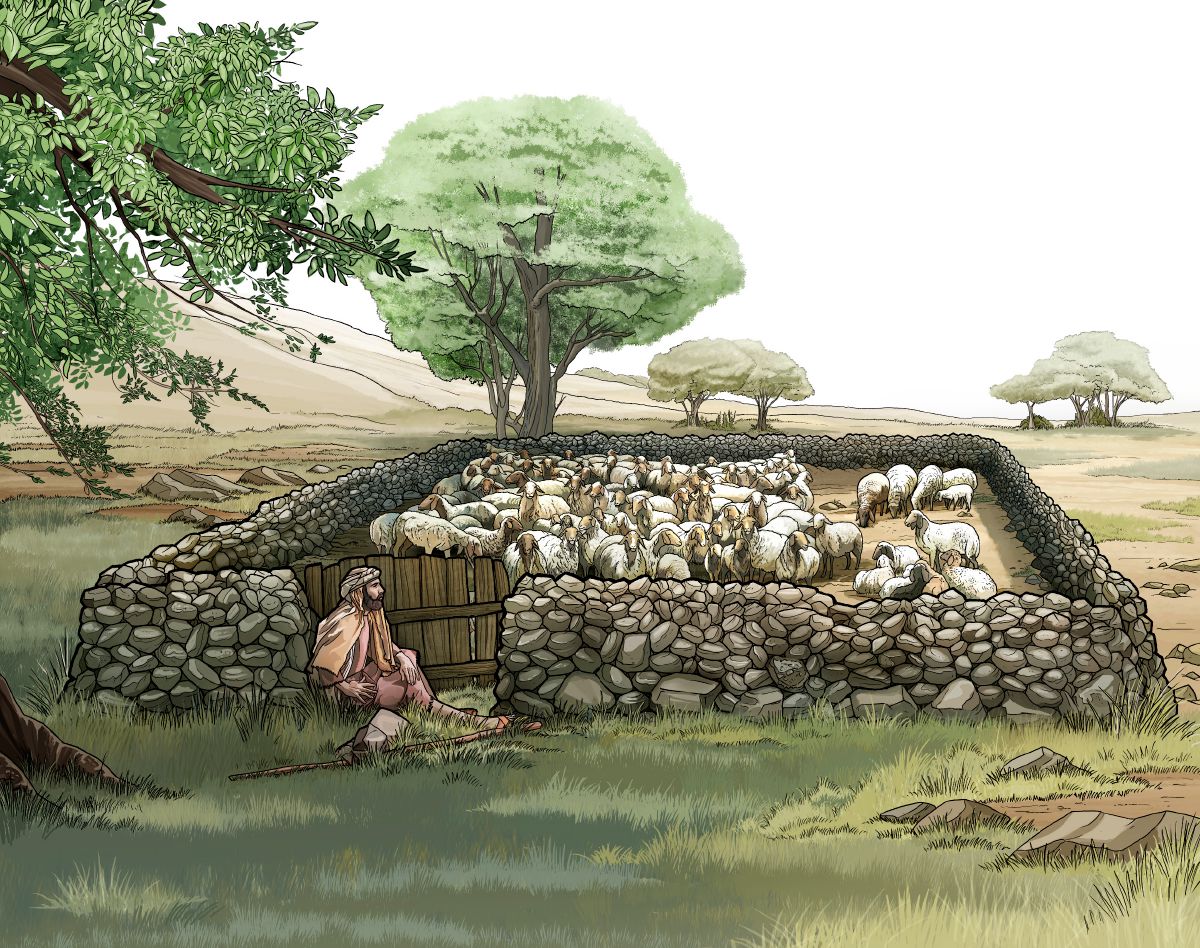
Since sheep theoretically do not always need a covered resting place, so-called sheepfolds can help to organize the herd.
This enclosure, usually protected by stone-walls or a wicker-fence, is used to count herd animals, sort them out and prepare them for slaughter or shearing.
The sheepfold also helps to keep the herd together in case of danger or a stormy night.
In settlements there are usually one or two such permanent enclosures in the pasture areas outside. Shepherds also temporarily build sheepfolds to better manage animals over the grazing months.
(fencing specific to each animal is listed below with the animal species.)
Husbandry
Nutrition
Purposes
Pros/Cons
Pasture all year with attached/close usable Stable
Grasses, herbs, leaves, bark, wood, roots, acorns, reeds, rushes
Especially in winter they peel trees and eat leaves
Transportation and travel animal
Horses are particularly suitable for work animals (forest work, especially in places and purposes that are difficult to access).
Horses can work in winter, but they need very good, nutritious supplementary feed when they are doing hard work
Requires large regrown pastures for good nutrition
Stable only (Donkey, Mule – special and not common)
Hay and Fodder, Vegetables and Fruits
Sales animal, sport and competition horse
Too little exercise and rapid degeneration of the horse with too little affection
Horses sleep better in Stables
Fencing: medium-height wooden or wattle fences, stone walls and thorn bushes
Husbandry
Nutrition
Purposes
Pros/Cons
Stable or small Pasture (if there are more than 2 (very unusual in iron age))
Grass, herbs, clover, hay and fodder
Draft and work animal for agriculture, farming and construction
Very well dressable,
Difficult in wet areas due to their heavy weight, eat a lot and need additional food
Fencing: low height wooden or wattle fences, stone walls
Husbandry
Nutrition
Purposes
Pros/Cons
Stable and Pasture mostly near to housing and living, can also be driven into the mountains or other regions over the summertime
Grass, herbs, clover, hay and fodder
Meat, milk, bone, horns and leather resource
Sometimes used as
workanimal
Have to be fed in winter, eat a lot and the hole day
(approx. 500 kg of hay over the winter)
Require large regrown pastures for good milk and meat production
Fencing: low height wooden or wattle fences, stone walls, bushes
Husbandry
Nutrition
Purposes
Pros/Cons
Outdoor keeping in the first 3 seasons, a shelter is required
In winter, a stable is needed because Central European goats cannot tolerate strong cold and drafts
Selective feeding, tasty grasses and herbs, raw fiber plants, tree bark, leaves, undergrowth, nettles, docks, berries, wild roses, shrubs and conifers
Additional food necessary in winter like collected branches, bushes and fodder
Meat, milk, bone, horns and leather resource
Well suited as pasture cleaner and weed destruction animal
(pasture rotation)
Environmental influences can have a major impact on the animals, vital functions and milk quality.
Constant need to move, very lively and require well-secured pastures
They eat trees and bark at a height of 1-2 meters, which can lead to poor tree growth
Fencing: high wooden or wattle fences, high stone walls, thick bushes (where they cant eat themselves trough)
Husbandry
Nutrition
Purposes
Pros/Cons
Pasture all year with attached/close usable Stable
Omnivore of plants,
Likes acorns and ivy in winter, hay and fodder
Meat, milk, bone and wool
Well suited as fieldhelper and pasture cleaner
(pasture rotation)
Allrounder animal,
Weaknesses in self-defense
Fencing: wooden or wattle fences, stone walls, bushes (they get stuck with their wool in them)
The sheep is the best farm animal of all.
It is used for field care, weed destruction and as natural fertilizer.
If the field was freshly plowed, sheep would come and eat the weeds.
When the seeds were sown in a field, the sheep were driven across the fields again to plant the grains deeper. This prevented birds and other rodents from destroying fresh seeds.
Spring
If the grain grew too dense or too thin, sheep were driven across the field to “harden” the grain stalks. This means the grain will later grow stronger and more nutritious.
Autumn
After the harvest, the sheep are driven across the field and herded together. They now eat the naturally sown seeds and the leftover straw on the field.
Winter
In winter they are brought back into the field if the seeds grew too quickly and the snow could suffocate the plants. This means that the grain grows even stronger in the spring.
Fertilizer
8 sheep produce as much fertilizer as 1 cow.
250 sheep replace the manure of 30 cows.
By driving the animals across fields, the soil is naturally fertilized.
Husbandry
Nutrition
Purposes
Pros/Cons
Pigs can be outside all year round, but they need shelter and food, especially in winter
They eat almost everything from plants to meat. That doesn’t mean that everything is good for them.
Young grasses, clover, herbs and protein-rich food are especially good for their growth
In winter, additional food containing dock and sorrel is recommended
Meat, Intestines
Pigs remain near or in the settlement due to their higher value and the more difficult supply situation.
They can be driven
trough the close woodlands too searching for roots and more.
Waste destroyer
Fencing: low height wattle or wood fences, stone walls, bushes – preferred with deeper ground anchoring on slopes to prevent digging
Husbandry
Nutrition
Purposes
Pros/Cons
Chickens need stables and breeding places
Grass, clover, alfalfa, nettle, herbs, cabbage leaves, meadow cuttings, fruit, vegetables, corn/grain rests
Eggs, Feathers, Meat
Chicken remain near or in the settlement due weaknesses in self-defense and weather changes
Waste destroyer
Fencing: medium height wattle fences, stone walls, bushes – preferred with deeper ground anchoring on slopes to prevent digging
Stables only make it easier to deal with large work animals such as oxen and horses. All animals except goats and chickens can spend the winter outdoors without any problems.
Driving most animals to other pastures was very popular and even took place on a larger scale across herds and settlements.
West and South German Association for Antiquity Research and University Lecture
https://www.ag-eisenzeit.de/
https://portal.dnb.de/opac.htm
Lecture and Research by:
Claudia Tappert, Christiana Later, Janine Fries-Knoblach, Peter C. Ramsl, Anna M Bauer, Peter Trebsche, Stefanie Wefers, Julian Wiethold
Prev
Next