By clicking “Accept”, you agree to the storing of cookies on your device to enhance site navigation, analyze site usage, and assist in our marketing efforts. View our Privacy Policy for more information.
Button arrow icon
0
locations
0
completed
0
contributors
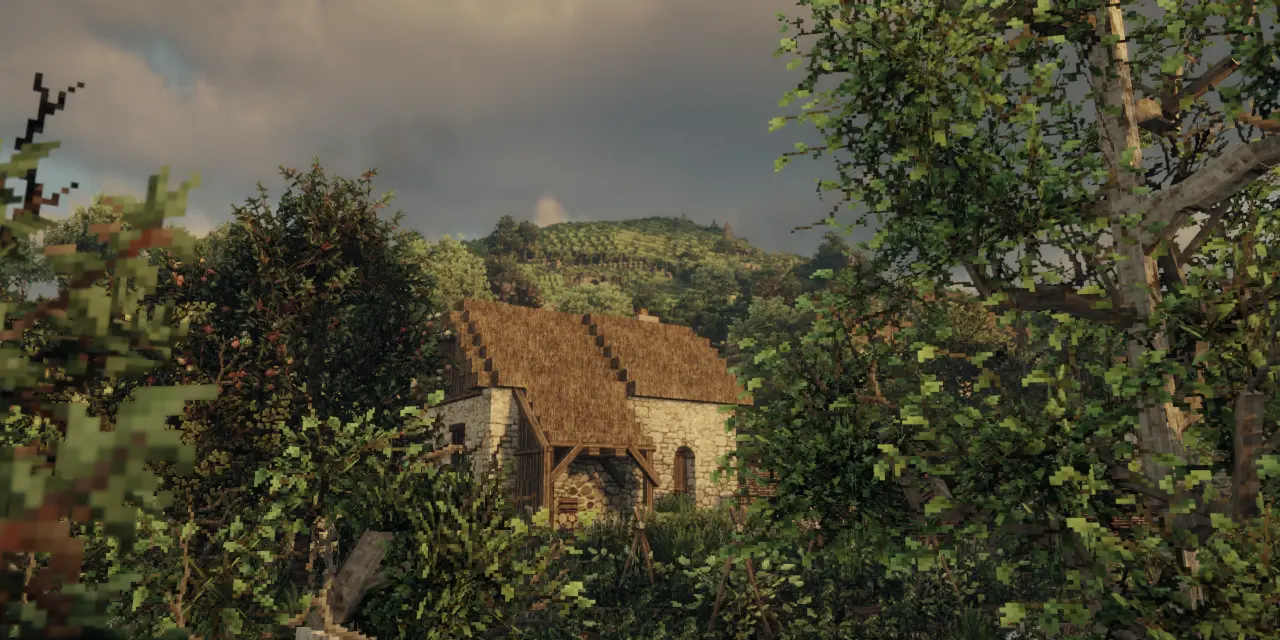
Bree was the chief village of the Bree-land, a small inhabited region, like an island in the empty lands round about. Besides Bree itself, there was Staddle on the other side of the hill, Combe lying in a deep valley a little further eastwards, and Archet on the edge of the Chetwood. Lying round Bree-hill and the villages was a small country of fields and tamed woodland only a few miles broad.
- The Fellowship of the Ring (Book 1), Chapter 9

Bree-land is a region in central Eriador, centred around the village of Bree. Consisting of the eponymous village, the settlements of Staddle, Combe and Archet, as well as a few other isolated dwellings, it is the westernmost location in Middle-earth inhabited by men. Bree-land is situated at the crossroads of the Great East Road and the Greenway, and many travellers have had much needed rest at Bree’s inn, the Prancing Pony.

History

Locals claim that men have lived in Bree since the First Age, and the region was certainly inhabited in the Second Age. It became a part of Arnor after that realm’s founding at the beginning of the Third Age, and then its successor state of Arthedain; although it is situated close to Weathertop, where many fraught battles were pitched, there is no record of violence around Bree-land in the wars between the successor states of Arnor or against Angmar. Despite the collapse of Arthedain after the sack of Fornost, Bree and Bree-land remained inhabited, protected in secret by the Rangers. In T.A. 1300, hobbits first came to Bree-land, having migrated westwards from the Vale of Anduin; many of these moved further westwards still, to found the Shire, though some still remain. In T.A. 2941, a chance meeting between the wizard Gandalf and the dwarf Thorin Oakenshield brought about the Quest of Erebor and the killing of the dragon Smaug.

Geography

Bree-land is centred around Bree-hill, upon the western slopes of which is nestled the village of Bree. The villages of Combe and Staddle are situated on the opposite side, in small dales of their own, with Archet being under the eaves of the Chetwood. Various individual homes and homesteads lay outside of these four main settlements, with a sizable hobbit minority to be found, especially in Staddle. Bree-land is bracketed by hills to the west and south, by the Barrow-downs and South Downs respectively- between these hills runs the Greenway, the old road from Fornost to Osgiliath. This bisects the East Road in front of the gates of Bree, making the region an important rest-stop for travellers of various races. In the east, the Chetwood gives way to the Midgewater Marshes, beyond which lie the Weather Hills and Weathertop. At the very eastern edge of Bree-land is the Forsaken Inn, a ruined inn a day’s march east of Bree, past which the road goes unmeasured.

Climate

Bree-land has a temperate climate, though is in close proximity to the foggy Barrow-downs.

Culture

Due to its isolated position at an important crossroads, Bree-land has a multi-racial culture unseen in most parts of Middle-earth. The inhabitants themselves are mainly men, though there are also many hobbits. The two races keep out of each other's affairs, though are on friendly terms, with hobbits living mainly in the village of Staddle or in holes higher up on the slopes of Bree-hill. The hobbits maintain some links with their kin in the Shire, visiting them on occasion and on others receiving travellers themselves, usually from Buckland. Dwarves can also be found journeying between the Ered Luin and mountains to the east, though these stay mainly in Bree. Rangers of the North, despite playing a large role in the safety of Bree-landers, are generally shunned by the populace, though they often camp in the area and visit the settlements.

Governance

Bree-land does not seem to have any visible structure of governance, though the innkeeper of the Prancing Pony seems to have a degree of influence. Despite this, there is a regular watch set at the gates of Bree, which are kept somewhat maintained.

Economy

As Bree-land is so isolated, the region is entirely self-sufficient, with farmland covering most of what isn’t either a settlement or the Chetwood. Along with more basic fare, pipeweed is grown by hobbits, who claim to have begun the fashion of growing it before any in the Shire. Hospitality for travellers is provided at the Prancing Pony, and various other trades can be found in Bree, to serve those passing through as well as the inhabitants.

No items found.